
Designing for Neurodiversity: Creating Spaces Where Everyone Thrives
For many years, workplace design focused on creating one environment for everyone.
One lighting solution.
One workstation.
One colour palette.
One way of working.
Yet no two people experience a space in exactly the same way.
Our brains process light, colour, sound, texture and movement differently. Some people thrive in energetic environments full of collaboration and activity. Others perform their best in spaces that are quieter, softer and more restorative.
The future of design isn’t creating spaces that work for the average person.
It’s creating spaces that support human diversity.
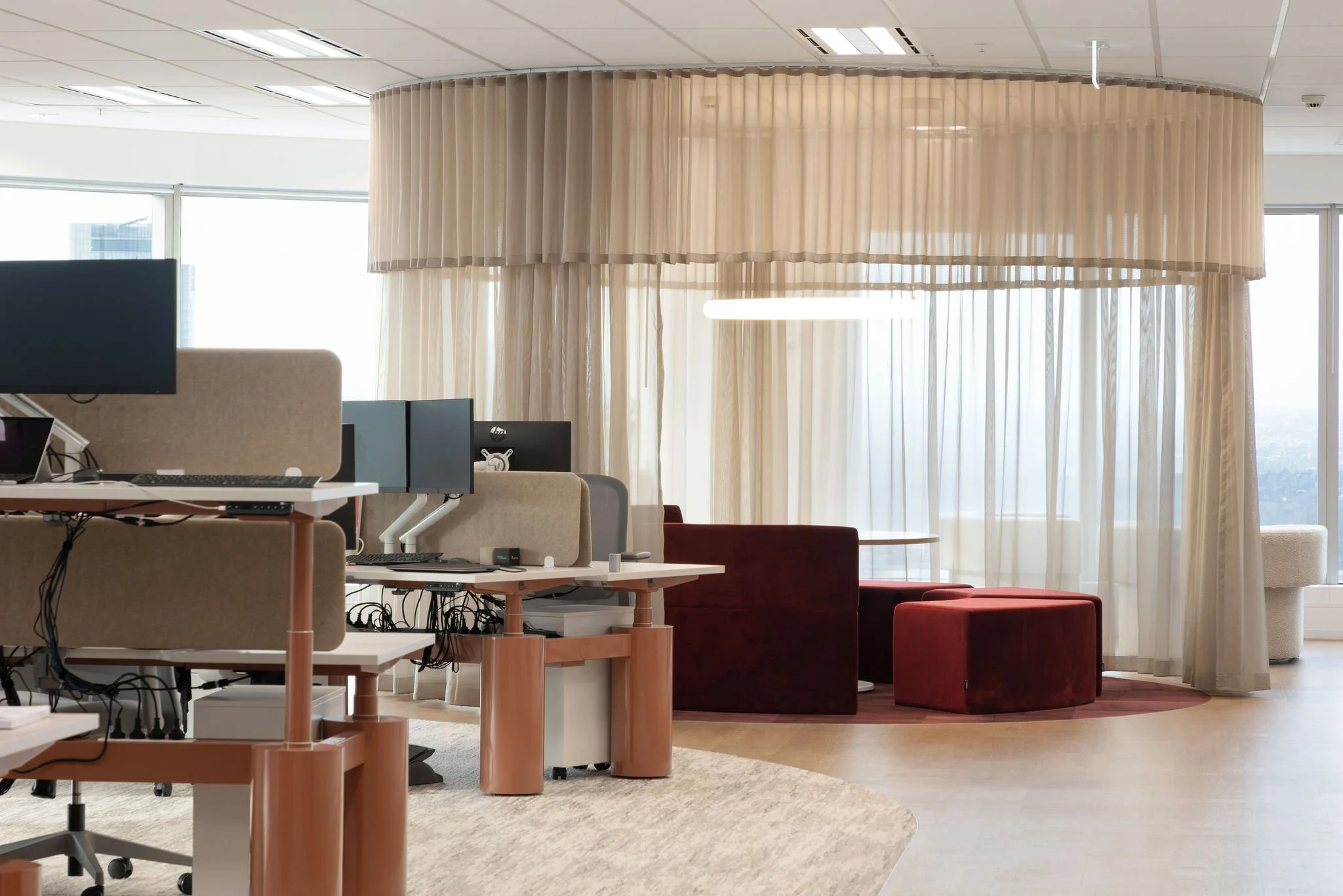
klaro workstations and central red collaboration area - office workstation - M3 Propoerty design gemma dasaklou and concept interiors
Neurodiversity Isn’t About Designing for a Minority
When we hear the word neurodiversity, we often think of autism, ADHD or dyslexia.
But designing for neurodiversity is really about recognising that every brain experiences the built environment differently.
When we design with greater sensory awareness, everyone benefits.
The parent returning from maternity leave.
The graduate overwhelmed by their first corporate role.
The executive making complex decisions.
The introvert.
The extrovert.
The creative thinker.
The analytical thinker.
A truly human-centred workplace doesn’t ask people to adapt to the building.
It asks how the building can better support the people inside it.
Colour Should Calm | Not Compete
One of the biggest misconceptions I see is that designing for neurodiversity means removing colour altogether.
I couldn’t disagree more.
Colour brings warmth.
Identity.
Emotion.
Joy.
The answer isn’t creating sterile white boxes.
It’s choosing colour intentionally.
Rather than overwhelming the senses with highly saturated colours across an entire workplace, I prefer layered palettes inspired by nature.
Soft greens.
Warm timber.
Muted terracottas.
Earthy neutrals.
Gentle blush and dusty pink tones.
These colours often create warmth and psychological comfort without demanding attention, while still giving a workplace personality.
Colour should support people.
Not compete with them.
Lighting Is One of the Most Powerful Design Tools
If there is one design element capable of changing how we feel almost instantly, it is lighting.
Yet it is often treated as an afterthought.
Lighting influences mood, alertness, comfort and our natural circadian rhythm—the internal body clock that helps regulate our sleep–wake cycle.
Research suggests that exposure to natural daylight during the day, together with thoughtfully designed electric lighting, can support alertness, wellbeing and healthy daily rhythms.
This is why I rarely rely on one source of overhead lighting.
Instead I layer light.
Natural daylight wherever possible.
Indirect lighting that softens the space.
Wall lighting that creates depth.
Up-lighting to reduce harsh contrasts.
Task lighting where focus is required.
Lighting should create atmosphere rather than simply illuminate a room.
Nature Isn’t Decoration
Plants are often added at the end of a project because a space feels unfinished.
I think that’s the wrong way to look at them.
Nature should be considered from the very beginning.
Research into biophilic design suggests that incorporating natural elements into workplaces can reduce stress and improve people’s experience of a space.
That connection can be created through:
Natural planting.
Timber.
Stone.
Organic textures.
Views to the outdoors.
Natural daylight.
Curved forms.
Materials that age beautifully.
Nature reminds us to slow down.
It brings softness into environments that can otherwise feel highly structured and demanding.
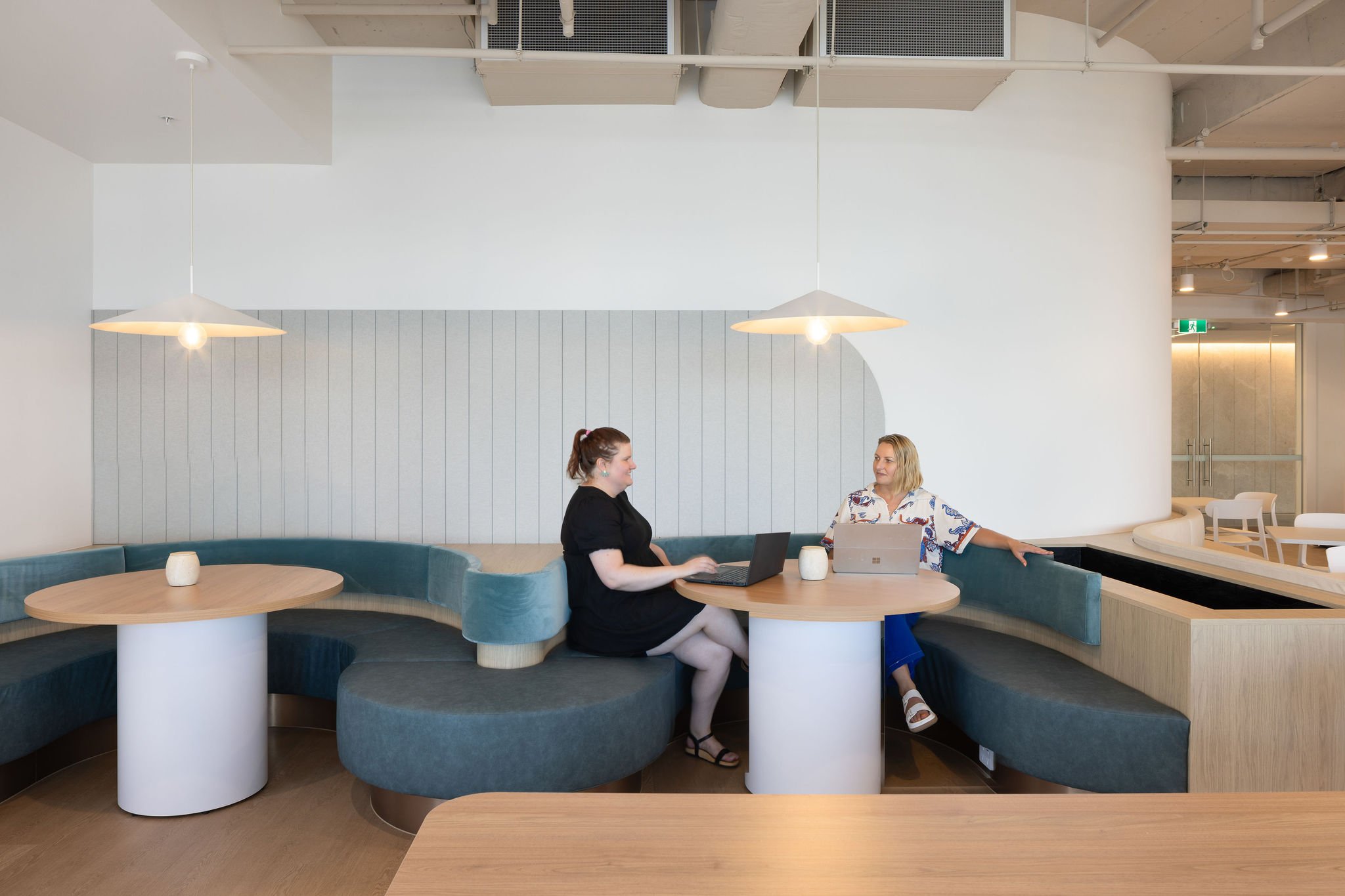
Beauty Matters
Somewhere along the way, beautiful design became viewed as a luxury.
I believe beauty has a purpose.
Beautiful environments encourage people to care.
To stay longer.
To connect.
To feel proud of where they work.
Beauty isn’t about expensive finishes.
It’s about creating harmony.
Proportion.
Balance.
Comfort.
Places that simply feel good to be in.
When people feel safe, comfortable and inspired, they often collaborate more easily, think more creatively and experience less unnecessary stress.
Designing for People
Every workplace I design begins with one simple question:
How do we want people to feel?
Not just what do we want them to do.
How do we want them to experience the space?
Because great workplaces aren’t remembered for their furniture.
They’re remembered for how they made people feel.
Designing for different brains doesn’t mean stripping away personality.
It means creating environments with enough warmth, flexibility and choice that more people can thrive.
That’s what human-centred design looks like.
And I believe that’s where the future of workplace design is heading.