
Why Workplace Design Is No Longer About Desks. It's About Human Performance
For decades, workplace design was measured by efficiency.
How many desks could fit into a floorplate?
How many people could work within a certain square metre allocation?
How much real estate could be optimised?
Today, that conversation has fundamentally changed.
The most successful workplaces are no longer designed around desks.
They are designed around people.
And more importantly, around human performance.
As the way we work continues to evolve, organisations are facing new challenges:
Rising business costs
Increased flexibility and hybrid work
Growing awareness of mental health and burnout
The need for stronger culture and connection
Pressure to attract and retain top talent
The workplace has become one of the most powerful tools businesses have to influence these outcomes.
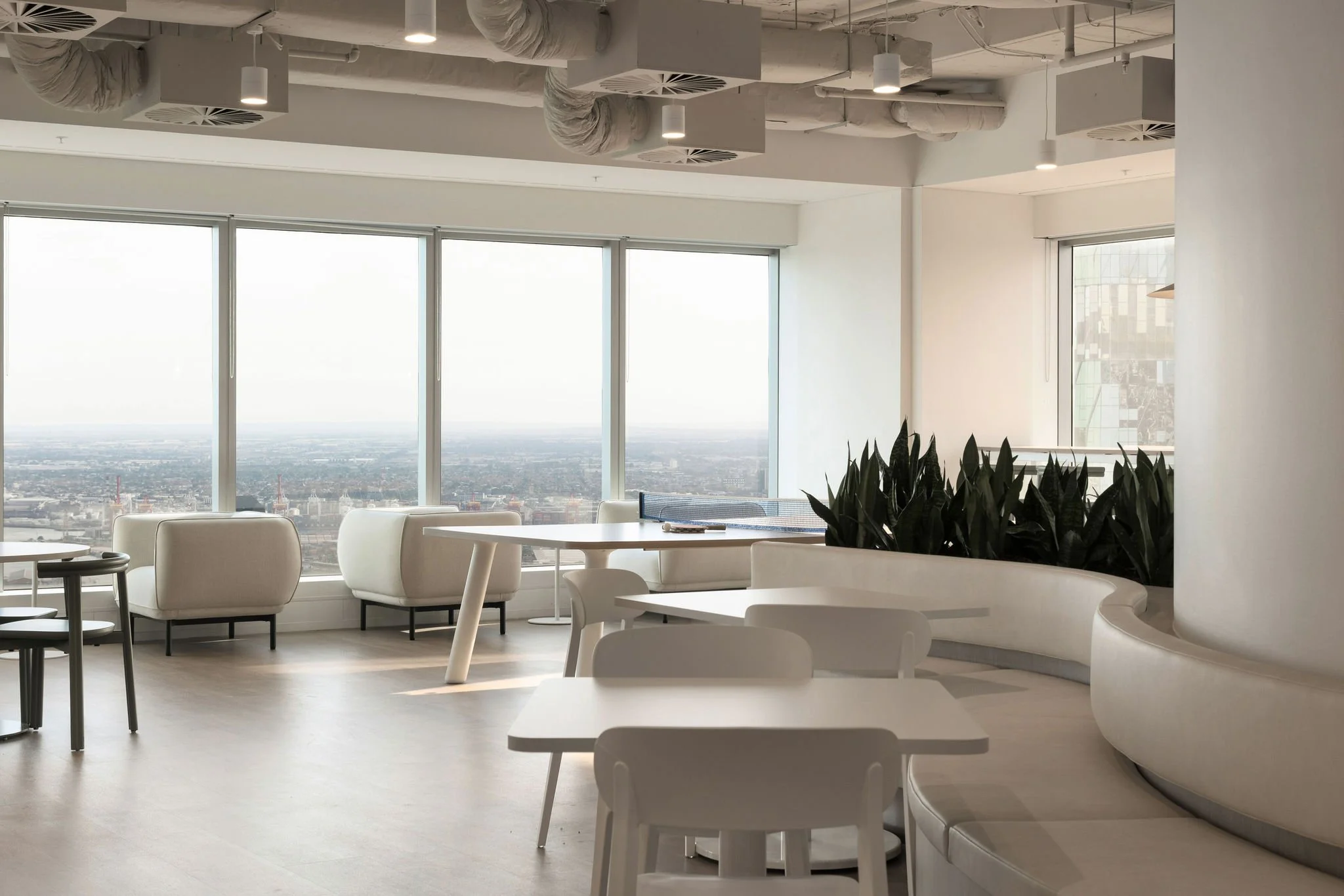
As the way we work continues to evolve, organisations are facing new challenges:
Rising business costs
Increased flexibility and hybrid work
Growing awareness of mental health and burnout
The need for stronger culture and connection
Pressure to attract and retain top talent
The workplace has become one of the most powerful tools businesses have to influence these outcomes.
Research consistently shows that our environment impacts how we think, feel, behave, collaborate and perform.
When people feel safe, supported and energised by their environment, they are more likely to:
Focus deeply
Collaborate effectively
Generate new ideas
Feel connected to their team
Stay with the organisation longer
This means workplace design is no longer simply an aesthetic exercise.
It is a business strategy.
The highest-performing workplaces today balance two objectives simultaneously:
Supporting business performance
and
Supporting human wellbeing
Not one or the other.
Both.
This might look like:
• Spaces that encourage collaboration when teams need connection
• Quiet areas that support focused work and reduce cognitive overload
• Biophilic elements that reduce stress and improve wellbeing
• Flexible environments that adapt as business needs change
• Thoughtful amenities that help people recharge and perform at their best
The organisations leading the way understand something important:
People are not machines.
Performance isn't created through pressure alone.
It is created through environments that enable people to do their best work.
The future workplace isn't about fitting more desks into a floorplan.
It's about creating spaces where people and businesses can thrive together.
Because when people perform better, businesses do too.
What do you think will have the biggest impact on workplace performance over the next five years: technology, culture, leadership, or the physical environment?